Daniel Pink’s work has inspired me for over a decade, and this video he shared reminded me of something I wrote in 2015 about what I call the “sponge factor.”
Here is a quick definition:
The sponge factor is someone’s ability to absorb new knowledge and feedback from learning and interactions and transform them into improved practices and possibly, new and better ideas.
When you think of it that way, this is not just something we should look for in people we bring into and develop in our organizations, but also what we should be developing in our students.
As I wrote in January of 2026, “We are not only preparing students for jobs that don’t currently exist, but also a workplace where many jobs will no longer exist.”
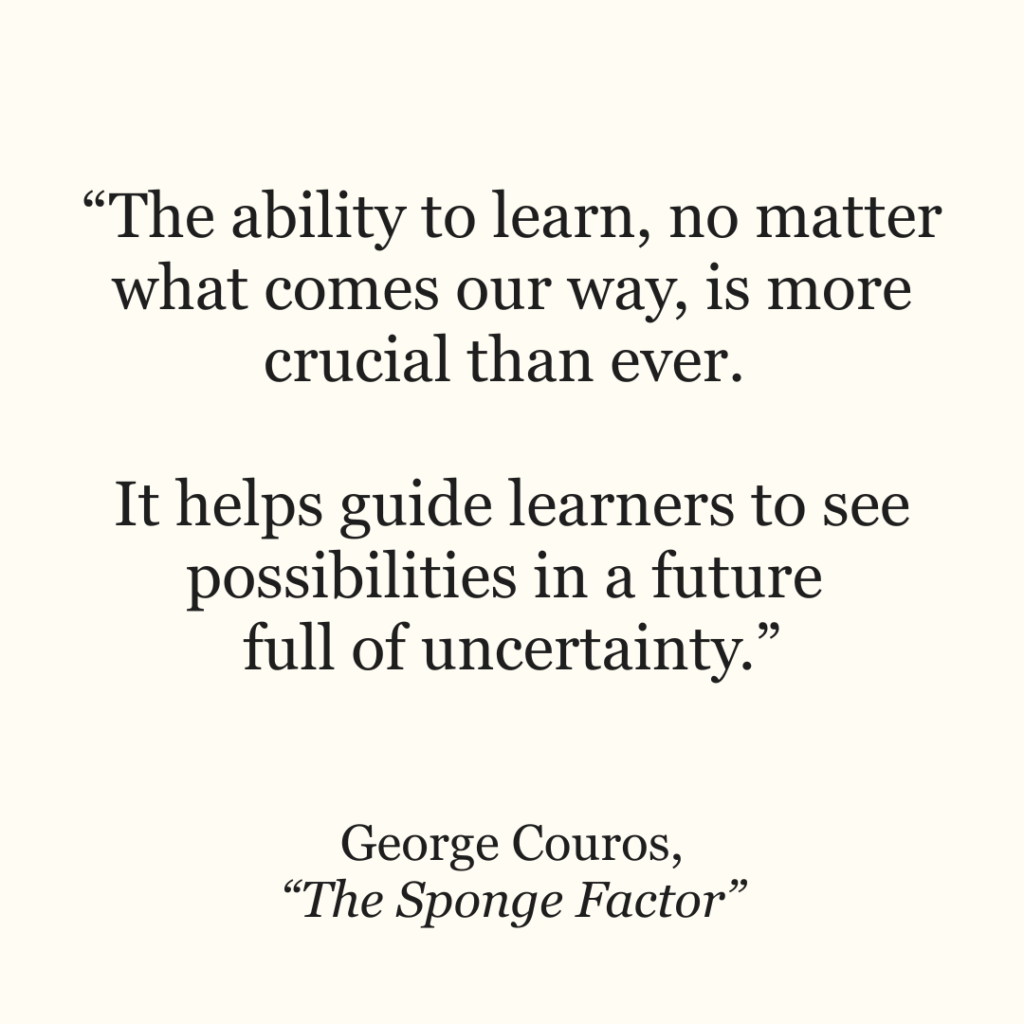
The ability to learn, no matter what comes our way, is more crucial than ever. It helps guide students (and ourselves) to see possibilities in a future full of uncertainty.
I wanted to share the original post below, but before that, I wanted to share some ways I have personally tried to develop “sponginess” in my own learning over the years.
1. Learning an instrument.
When I was about 30, I locked myself in my house for about 2 weeks until I learned to play the guitar. I am not giving any concerts (unless you want?!!?), and could probably do some campfire versions of Adam Sandler songs, but that is about it.
I started learning the piano when I was 49, and, again, no concerts, but I can play the easy version of almost every song from La La Land. Basically, I am Ryan Gosling without the looks or talent, but still samesies.
But here is where the sponginess comes in.
Jazz Musician Thelonius Monk once said, “The piano ain’t got no wrong notes.”
That is true.
But you also quickly learn what sounds good together, and what doesn’t, and that “sound” gives you immediate feedback to adjust.
Learning an instrument has not only taught me to adjust, but also the importance of routine and knowing the “basics” inside out.
2. Blogging.
Before I wrote any books, I blogged. In fact, I would never have written any books if I hadn’t blogged.
How does this promote sponginess?
Well, there is a permanence in a book. Writing a paper book might as well be writing on a stone tablet. Once that book is in someone’s hand, they are stuck with my thoughts as they are on the day that book was printed.
But with my blog, I can go back to my former posts and revisit them, whether I agree or not. My book, “Forward, Together,” actually starts by discussing a blog post I wrote in 2011 that I am embarrassed by today.
That is not immediate feedback, but it definitely shows growth over time.
Yet comments and responses on social media have quickly changed my thinking, and much of what I have written in my books over the years was not my original ideas, but ones that were challenged with respect. Some would be embarrassed that they felt wrong, whereas I am proud that I show I can grow.
(See chart from “Forward, Together” below)
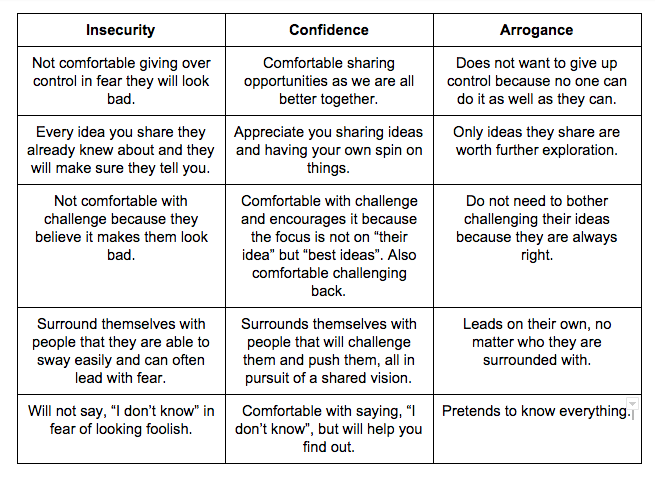
This blog post is kind of evidence of the ability to build on and grow upon my ideas over time 🙂
3. Consuming information that I do not agree with.
I think this one is one of the most essential in our world today.
Whenever a book, video, or some type of media comes out that disagrees with how I think in areas I am passionate about, it is one of the first things I am drawn to. I want to know the argument against what I believe because a) I can change my mind, or b) it forces me to tighten up my own thinking.
Sean Blanda once wrote, “As any debate club veteran knows, if you can’t make your opponent’s point for them, you don’t truly grasp the issue,” and that has always stuck with me.
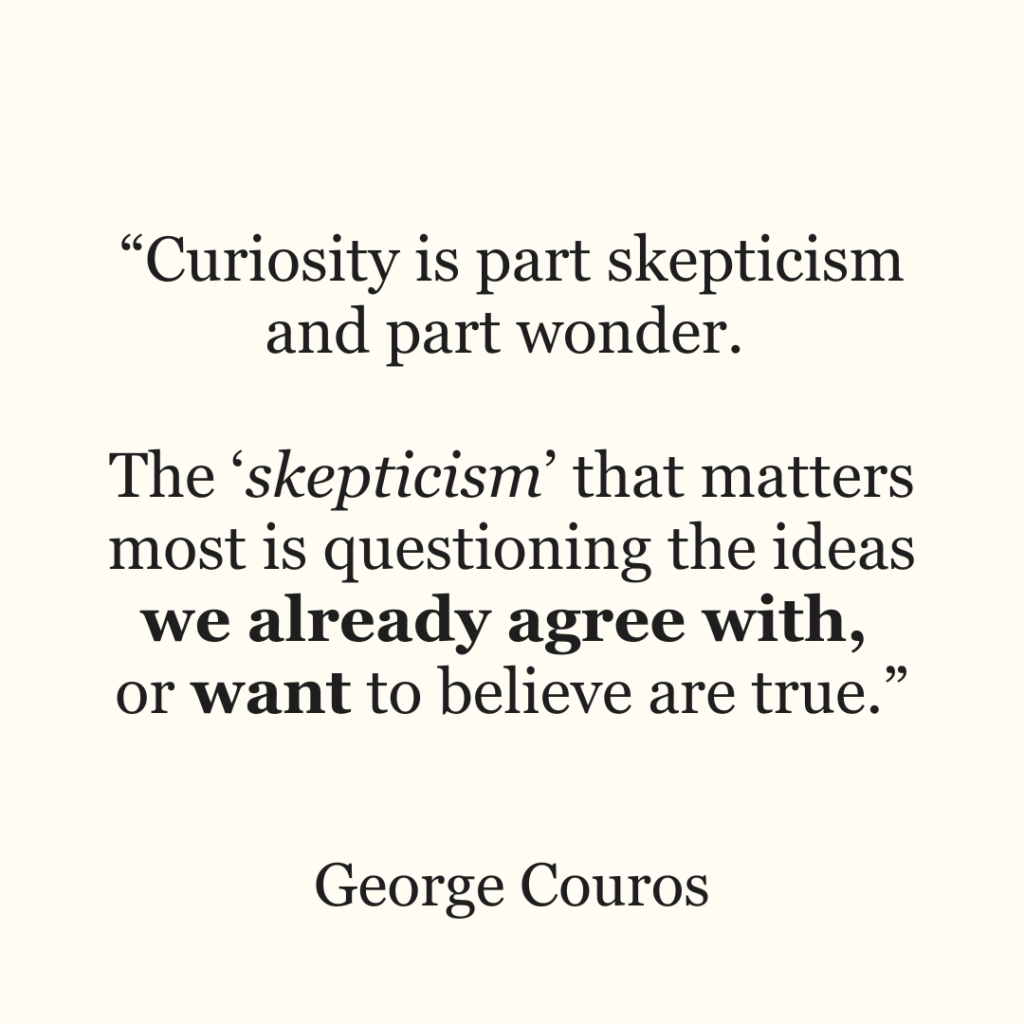
Again, as I shared in “Forward, Together,” it is important to see that “curiosity is part skepticism and part wonder.”
The “skepticism” that matters most is questioning the ideas we already agree with, or want to believe are true.
All that being said, I wanted to share the above ideas from my personal learning that help me take in feedback and adjust quickly. As you read the post below, consider the ways you practice “sponginess” in your own practice. And if you blog, I would love for you to build on this post and share those ideas 🙂
Below is the original version from 2015 with Grammarly edits (another way that helps me adjust on the fly that I didn’t use back then!) and how I first shared the idea.
The Sponge Factor
I learned a lot from my days as a basketball referee.
Although the environment was quite collaborative, as great referees worked together on the court, there was also significant competition on the field. The best referees would get higher-level games based on their consistent performance.
One of the things that I found interesting was the half-time feedback referees would receive from evaluators and how it was delivered. Having between 10 and 15 minutes during a break in the next half, there was no time to mince words. Evaluators could often be blunt and sometimes brutal in their feedback. They needed you to correct your work now, and they didn’t have time to incorporate their input. The feedback given was not to be mean or harsh, but to make you better.
The interesting thing about this is that you could have two refs in a game, with one perhaps being a better quality at the beginning than the other, but what the evaluators would look at was not how good you were at the beginning but how teachable you were by the end.
If feedback was given in the first half, they expected you to implement it in the second.
Sometimes, it wouldn’t work for a referee, but what the evaluators looked for was the willingness to take feedback and give the learning a shot. You may not have been perfect on your first try, but your desire to learn would surely improve your performance as a referee.
The ability to be a “sponge” was crucial.
This “sponge” factor is crucial for educators.
I have often said that I am much more comfortable working with a teacher who is willing to learn and grow than with one who thinks they have “mastered” teaching. Things will change in education and society, and someone unwilling to evolve in their practice will eventually become irrelevant. It may not be next year or the following year, but it will come eventually.
A person who is willing to learn continuously and evolve will always stay relevant.
Yet there are people in all fields who will listen to feedback, nod in agreement, and go back to what they have always done.
There is a difference between “hearing” and being “open” to feedback.
As educators are currently interviewing for positions, one question I have asked in interviews before is, “Tell me an area where you received feedback, and what you did to improve.”
This question promotes a vulnerability needed to be an educator, that we are not a “know-it-all” but are willing to learn. The willingness to embrace turnaround learning is crucial to growth, which is not only being open to feedback but also doing something because of the feedback you have received.
Change will happen regardless of our own personal growth.
Are we open to our own evolution?
