I was blessed to see a snippet on Instagram of my friend, Dr. Rachel Edoho-Eket’s keynote at the ISTE-ASCD conference, and I loved what she shared about the importance of starting with students’ strengths.
Here is what she shared:
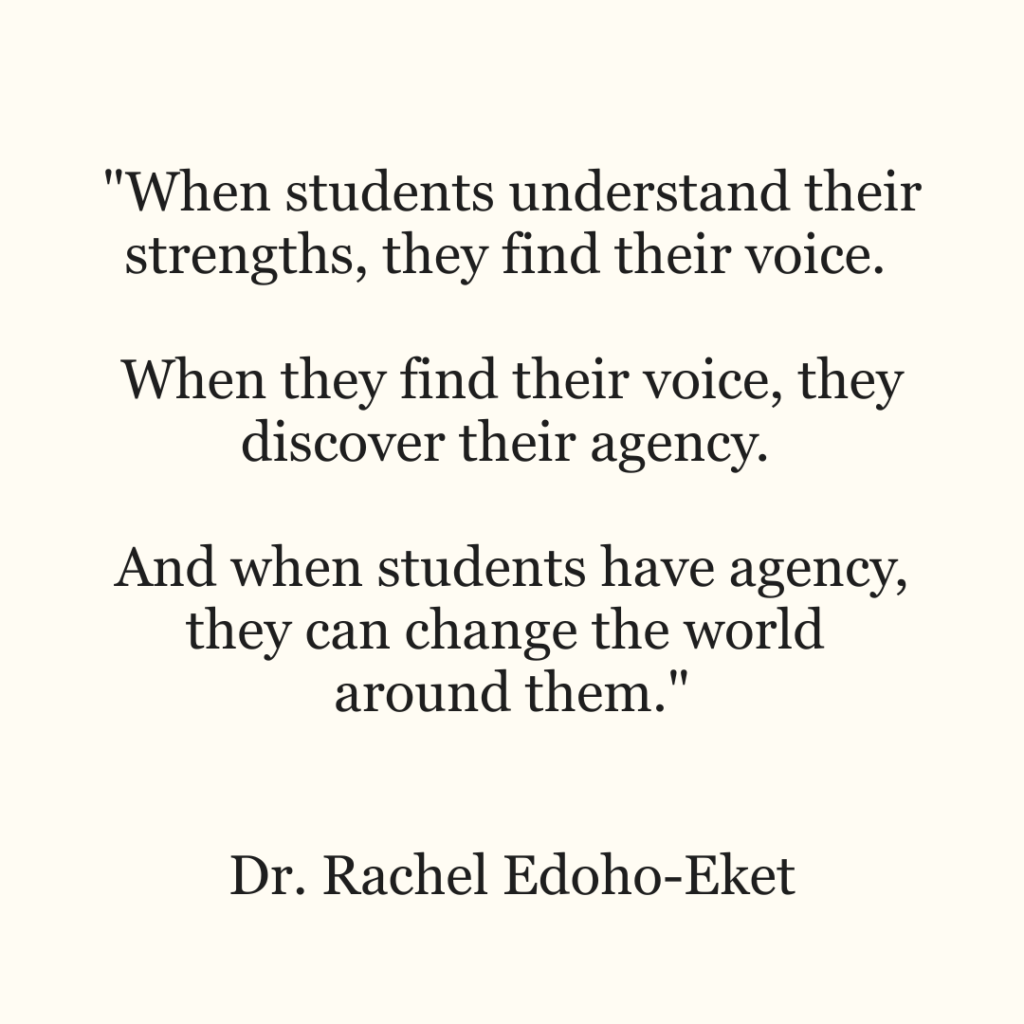
Now, this is something I truly believe and have been writing about for as long as I can remember.
In “The Innovator’s Mindset,” I shared an entire chapter titled “Strengths-Based Leadership”. I challenged readers to think about the possibilities of focusing on what people can’t do (or struggle with), and start with where they are proficient:
“What if we stopped operating on a deficit model that focuses on a learner’s weaknesses and started operating on a strengths-based model that builds on the learner’s strengths?
If we are going to empower our students, we must help them find what they love and create learning experiences that encourage them develop their strengths.”
Here is what people sometimes lose in this idea or question. Shouldn’t we focus on where people struggle and help them develop those skills?
Well, yes.
It is not about seeing education as an opportunity to avoid developing our weaknesses, but about focusing on starting with our strengths. When people feel valued, they develop confidence, and with that confidence, they increase their competence.
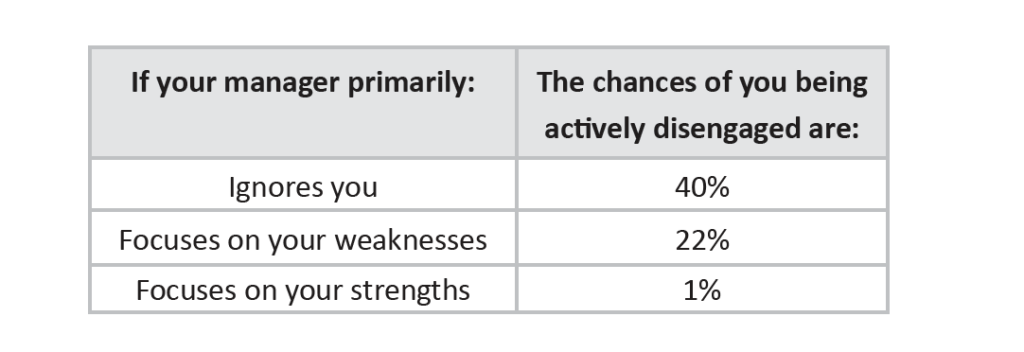
In fact, Tom Rath, author of “Strengths-Finder 2.0,” shared the following increase in engagement in the workplace when a manager focuses on strengths versus weaknesses:
And one of the best ways to start with student strengths is to find out what they love doing and where they already excel.
In “Innovate Inside the Box,” I shared the following idea for leveraging the beginning of the year with students, but honestly, it can be modified for any part of the year in a classroom.
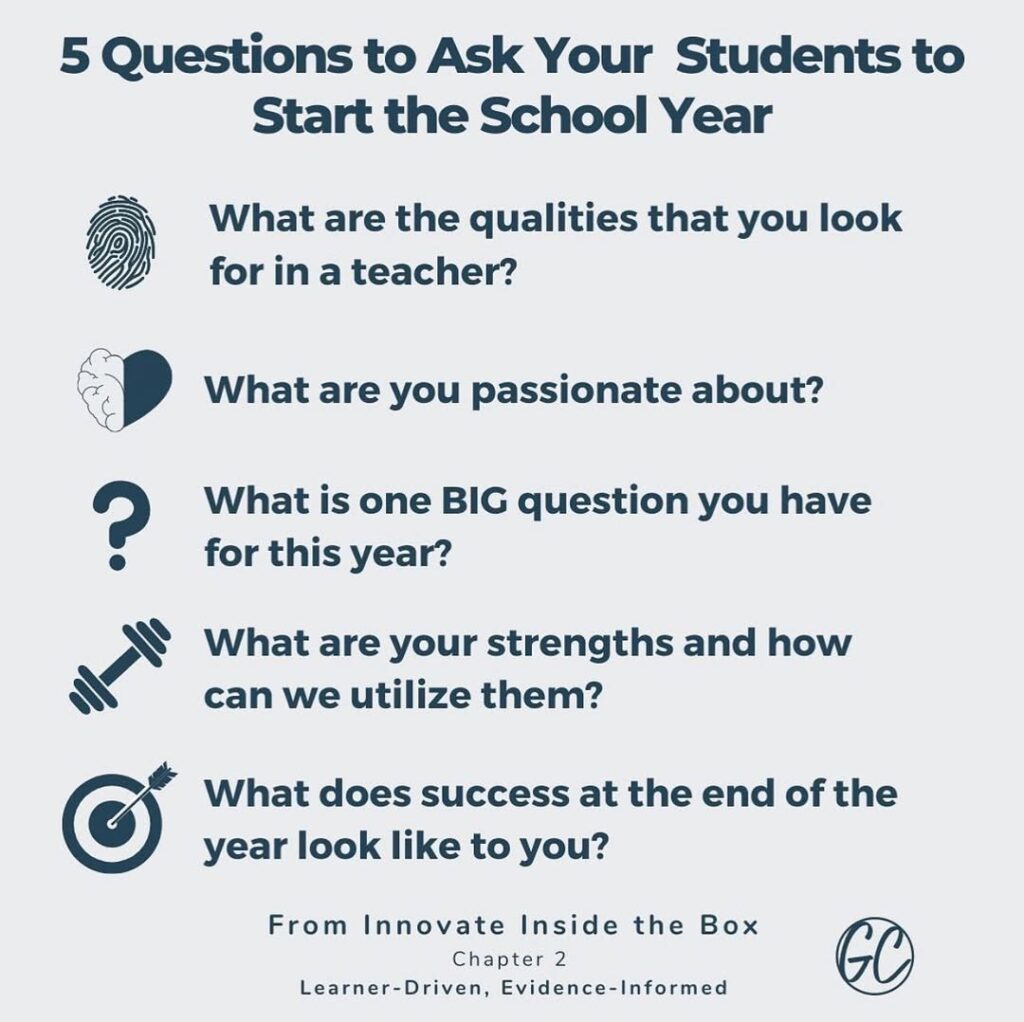
Please feel free to modify, add, or subtract from any of those questions.
Please note, this is not a nice “icebreaker activity” (and most people hate icebreakers, but they are afraid to admit it!).
This is a research activity that you can leverage throughout the year.
For example, if you asked me the above questions as a kid, I would have done everything to work “basketball” into my answer.
So if I am a struggling reader, do you know what would probably help? Find me a basketball book.
Kids will read at higher levels if they are interested in what they are reading about.
Through this example, you can see that starting with my strengths and passions (basketball) might help develop a weakness in reading.
Now, I clearly explain in the book that you can’t modify everything for every student in our classrooms (you will have to check out the book to go deeper into that idea), but the more you can do that, the more likely you are to go through the hard stuff when you feel valued enough to leverage your strengths.
What I just shared with you might be a great starting point for thinking about how to build on student strengths, but I think there is a much better place.
Start with the strengths of your staff.
In fact, if you focus constantly on what the adults can’t do, they will probably feel that encouraging them to focus on student strengths is hypocritical.
In “Forward, Together,” I share that one of the best ways to bring people together is not only recognizing their gifts, but creating a community that sees the gifts in one another:
If I could build on what people were already good at and help them see that in each other, how could that bring our school to become the best version of itself?
But too often with the adults, we focus on what they can’t do and what is lacking, and then tell them to appreciate each other.
In “The Innovator’s Mindset,” I share this story about a news article that really hammered home the idea to the public that teachers just weren’t doing enough.
I read an article in the Toronto Sun titled “Literacy Rates up but Students still Struggling with Math.”
The piece about Canada’s Ontario province focused entirely on math. Not one sentence celebrated the province’s improvement in literacy. The focus was, instead, on how math instruction and learning were not up to par. Should Ontario just ignore math scores and adopt the “you win some, you lose some” mentality? Absolutely not. Neither should its complete focus be on improving declining math results. Yet we continue to play this game of educational “whack-a-mole,” where one problem pops up and we focus on that until the next issue arises.
We cannot forgo a focus on our strengths for the sake of only emphasizing the areas where we struggle. But that’s what happens time and again. The deficit model compels administrators and educators to overcompensate in the areas that need to be “fixed.” When that occurs, all the great things that are already happening are quickly forgotten. The bottom line is: an environment where the message is always “we are not good enough” can be demoralizing and counterproductive for all stakeholders.
So what happens in that scenario with the news article?
District office feels pressure from media to improve math. They place that pressure on school administrators, who then pass it down to teachers, ultimately affecting students in the classroom.

Do you know what they could have focused on instead?
What were they doing that made them so good at literacy? And, how could they have applied that to teaching math?
Again, starting with strengths to improve weaknesses.
There is a difference between being valued and feeling valued. If people don’t feel valued, no amount of pizza in the staffroom will fix that problem.
When I shared the “5 questions” earlier in this piece for students, here is a version that you can leverage with staff.
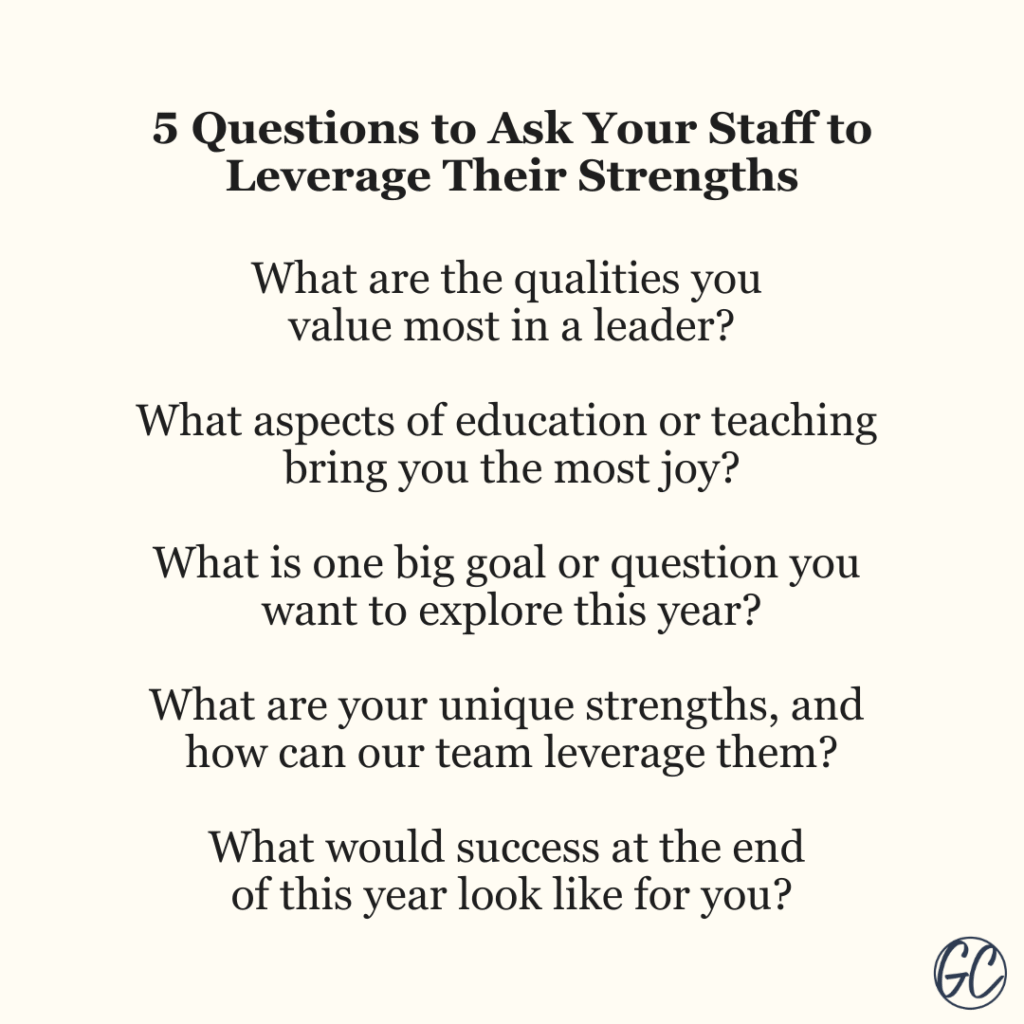
How could you leverage what you learn about your staff to make your year better? And when administrators leverage staff’s strengths, colleagues start to see who the real experts in schools are: their colleagues across the hallway.
In “Forward, Together,” one of the principles is to “Ensure People Feel Valued,“ and at the end of that chapter, I encourage readers to discuss with their community the following questions:
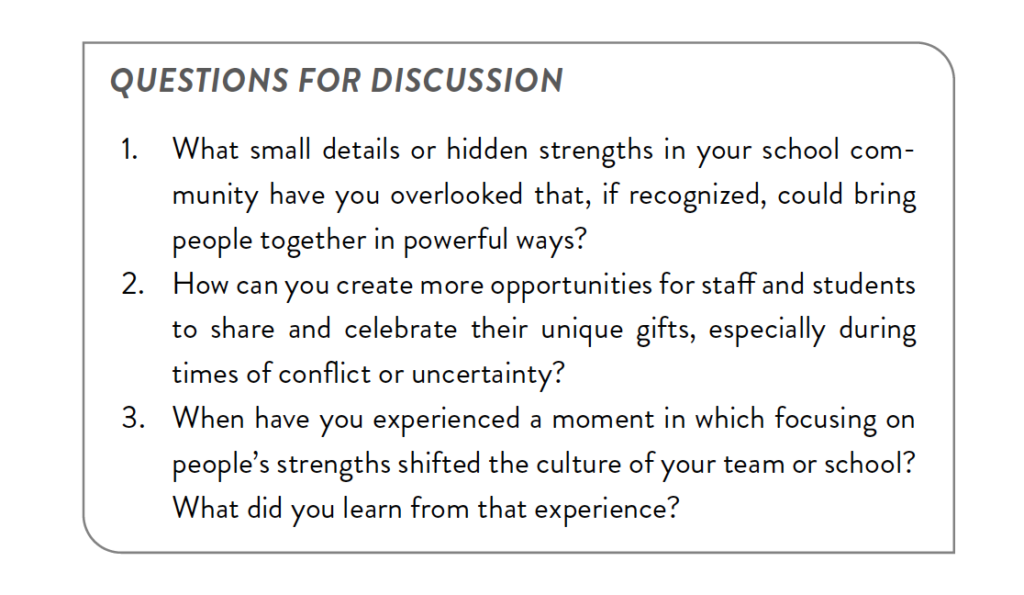
These questions won’t solve your problems, but taking action on the answers might.
As Marilyn Vos Savant shares, “Success is achieved by developing our strengths, not by eliminating our weaknesses.”
The interesting thing is that to better eliminate those weaknesses, start with what people are already good at.
If you ensure people know you see those strengths, it will not only trickle into our classrooms, they will also likely start to see the gifts in one another.
