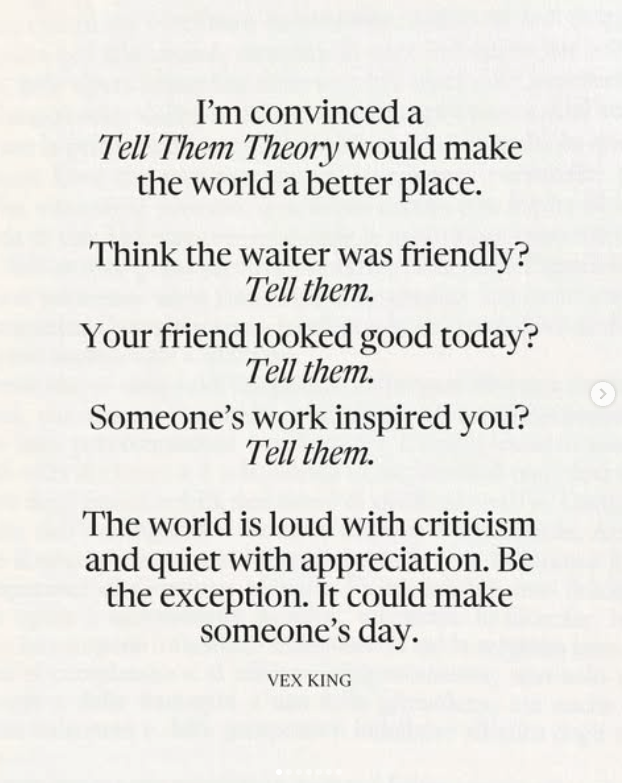
I recently saw this post from Vex King regarding the “Tell Them” Theory, and it deeply resonated with me, as I had already embraced the concept before it went viral.
It was probably around 2020 (did anything happen that year?) that I really started embracing this idea. My contention was and is that it is better to share gratitude too early rather than too late, and that year, that became abundantly clear.
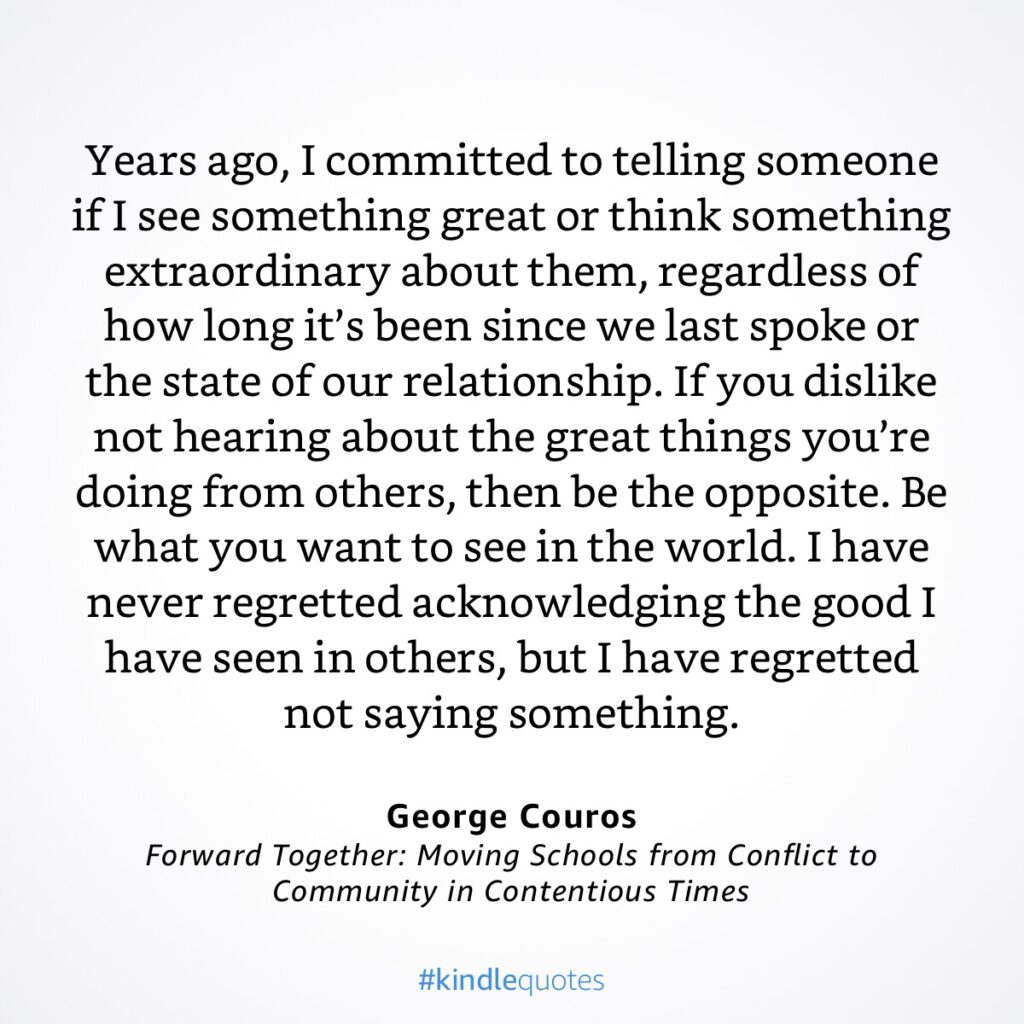
I also wrote about this concept in “Forward, Together” and shared the following from the book:
And as much as I believe in this idea, there have been times when I have been great about it, and other times, not so much.
Here is when I have been good about it, and how it applies to education.
When I was a teacher and school administrator, there was never a time when I walked by a student in the hallway and didn’t say something to them, and I did my best to find a positive comment to make their day. This had nothing to do with whether I taught the student or not (which is why I talk about the difference between a school teacher and a classroom teacher), because I knew if I had a positive interaction with a student in the hallway, it could make a teacher’s life in the classroom so much easier.
I often share with groups when speaking that I would look for students who might be having a hard day as a principal in the morning, because if I could make them smile, their teacher’s day might become so much easier. To be honest, this has always come naturally to me in school. I attribute that to growing up in a restaurant and watching my parents master the art of hospitality.
Outside of my work with students, though, I have made many missteps (many of which I intentionally share in “Forward, Together” and what led to growth).
Here is an example of an external interaction I have been working to improve.
A question I often get asked is, “Who is my biggest influence in education?” to which I have trouble pointing to one singular person. My response is often that I am influenced by so many teachers in classrooms today, who provide me with incredible insights into their classrooms. They are the experts in education, which is why I defer to them. For years, I have been reading educator blogs (that is still a thing), and I love hearing about the strategies and insights from teachers.
In the past, I have read their posts, nod in agreement, and marvel at their practice.
And then said nothing.
When I would say something, it was when I wanted to push back on their ideas because I didn’t necessarily agree. My viewpoint at the time was that these spaces are meant for growth, so when I disagreed, I believed it could improve practice.
So, think of how poor that practice is?
I only challenged publicly, but commented so privately that it would never leave my head. Even if the advice was great, did it help? I have worked with people like this, and when you only hear what you are doing wrong, you tend to dislike them, tune them out, or both.
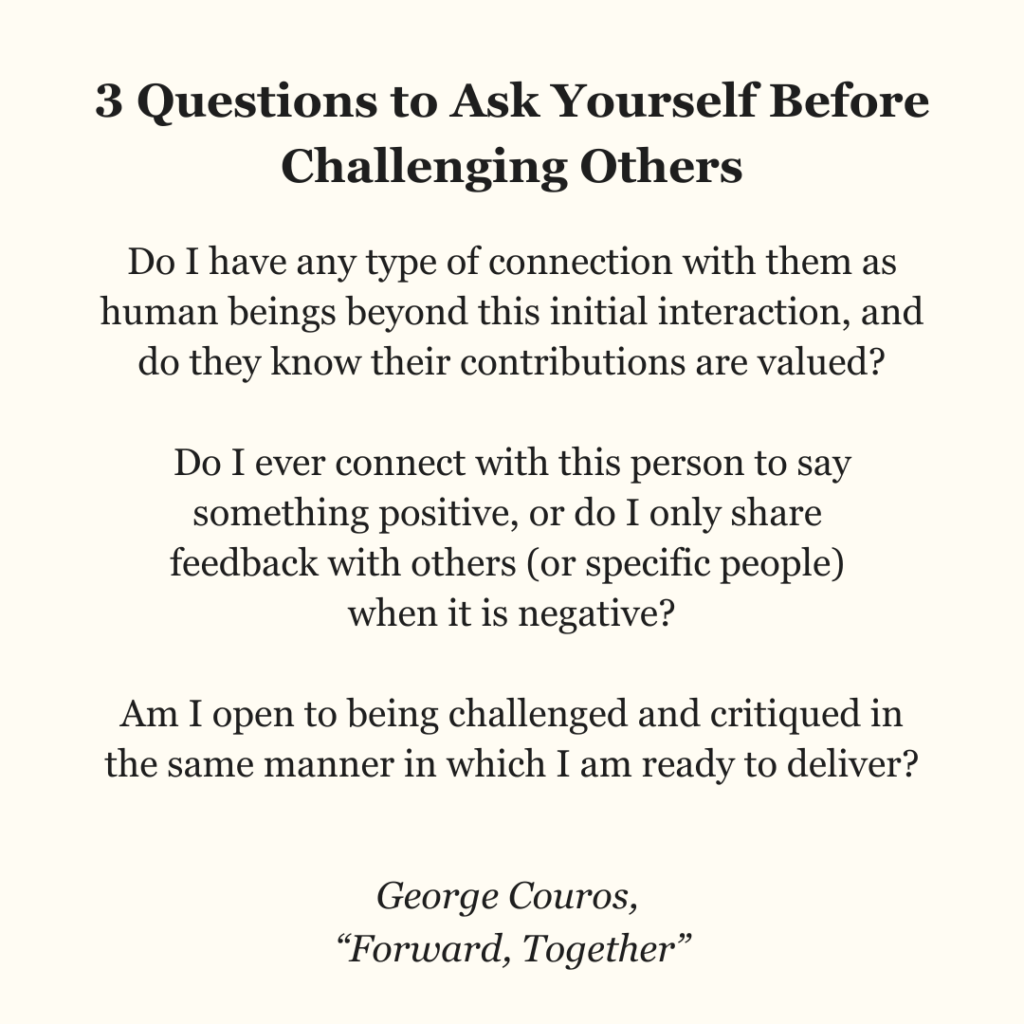
In one of my most viewed posts ever, titled “3 Questions to Ask Yourself Before Challenging Others,” I wrote the following considerations on how we interact with others in hopes of shared growth:
1. Do I have any type of connection with them as human beings beyond this initial interaction, and do they know their contributions are valued?
2. Do I ever connect with this person to say something positive, or do I only share feedback with others (or specific people) when it is negative?
3. Am I open to being challenged and critiqued in the same manner in which I am ready to deliver?
Because the idea of letting someone know when they are doing something great, even when they are not expecting it, builds rapport for when conversations might become more challenging later! We often think growth comes from challenging others, but that sentiment, in isolation, is something I would disagree with.
Growth comes from elevating others.
When people feel appreciated for doing something good, they want to do it more. And when they know they are valued, they are more open to challenge. That is also about elevation, but only if the relationship is there. When you say something good or bad, it spreads.
Sharing authentic appreciation for others is something that I hope will continue to go viral.
You have to make sure you let them know. It will make both of you (and others) better.
If this post resonated with you, I encourage you to check out my latest book, “Forward, Together: Moving Schools from Conflict to Community in Contentious Times,” which is not about how we make people agree with us, but how we can make progress together when we disagree.
PS…I asked ChatGPT to provide a brief overview of this post, and here is what it shared:
1. What is the “Tell Them” theory?
The “Tell Them” theory holds that when you notice something positive about someone, you should tell them directly rather than keeping your appreciation to yourself. Sharing gratitude strengthens relationships and encourages people to continue doing meaningful work.
2. Why is appreciation important in leadership and education?
Appreciation builds trust, strengthens relationships, and creates a culture where people feel valued. When educators and leaders acknowledge the good they see in others, it encourages growth, collaboration, and a stronger sense of community.
3. How can leaders build stronger communities through appreciation?
Leaders can build stronger communities by intentionally recognizing others’ strengths and contributions. When people feel seen and valued, they are more open to feedback, more willing to collaborate, and more committed to moving forward together.
