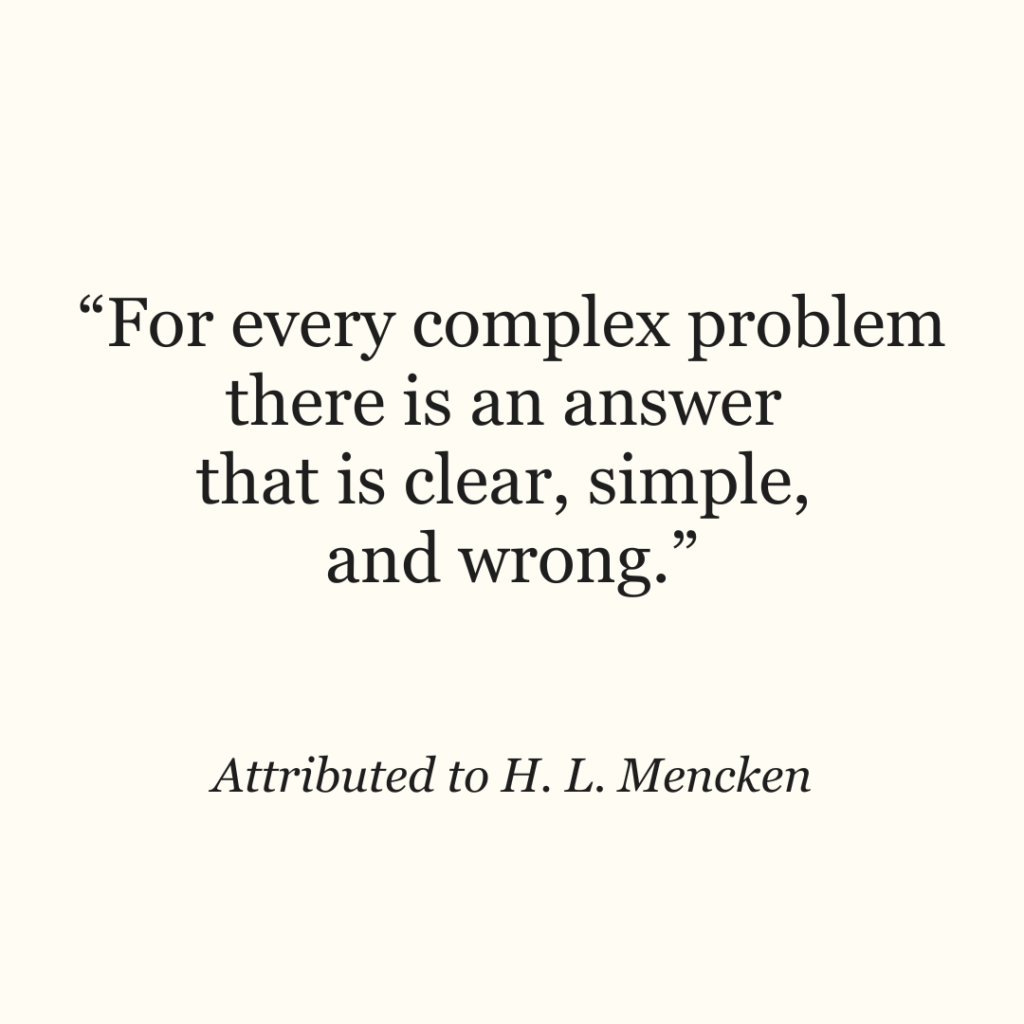
I saw this post on Instagram from a local realtor in Orlando, and I found it a really interesting way to share an idea and find the “right” solution based on your context.

And as much as I was interested in the post, when I popped into the comments, that was what really fascinated me. It wasn’t people arguing about how they would approach something in their field, but sharing nuance in their solutions. Perhaps I didn’t even really understand what they were talking about, but they were talking.
And after I looked at the comments, I scrolled on by.
Then I scrolled back. I thought, “Huh? Is this something that would benefit people in education?”
Now, one of the ideas in “Forward, Together” is how we need to move from “debate to discussion,” and I share the following reason why:
“The reason I am more interested in discussion over debate is because the latter implies winners and losers, while the former is hopefully undertaken in search of a shared solution.”
Sharing different viewpoints on the answer might inspire different approaches. So I tried a “Forward, Together” version of the realtor post and shared the image below:
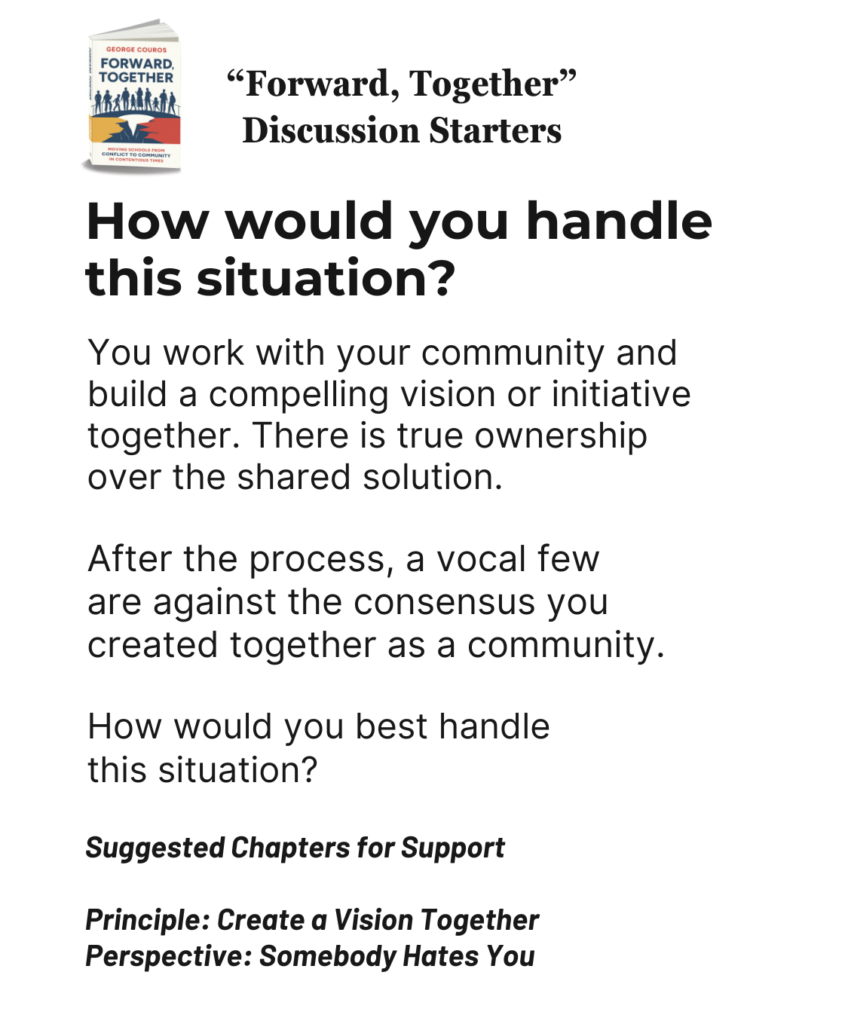
I was so proud of that post and was so excited by the feedback and discussion that it might inspire. The problem above is common in education, so some people might share their ideas based on a hypothetical situation, while others might draw on their past experiences.
It received one like and one comment at the time of writing this post. The one like was from the realtor that I referenced!
(I thought this meme was relevant!)
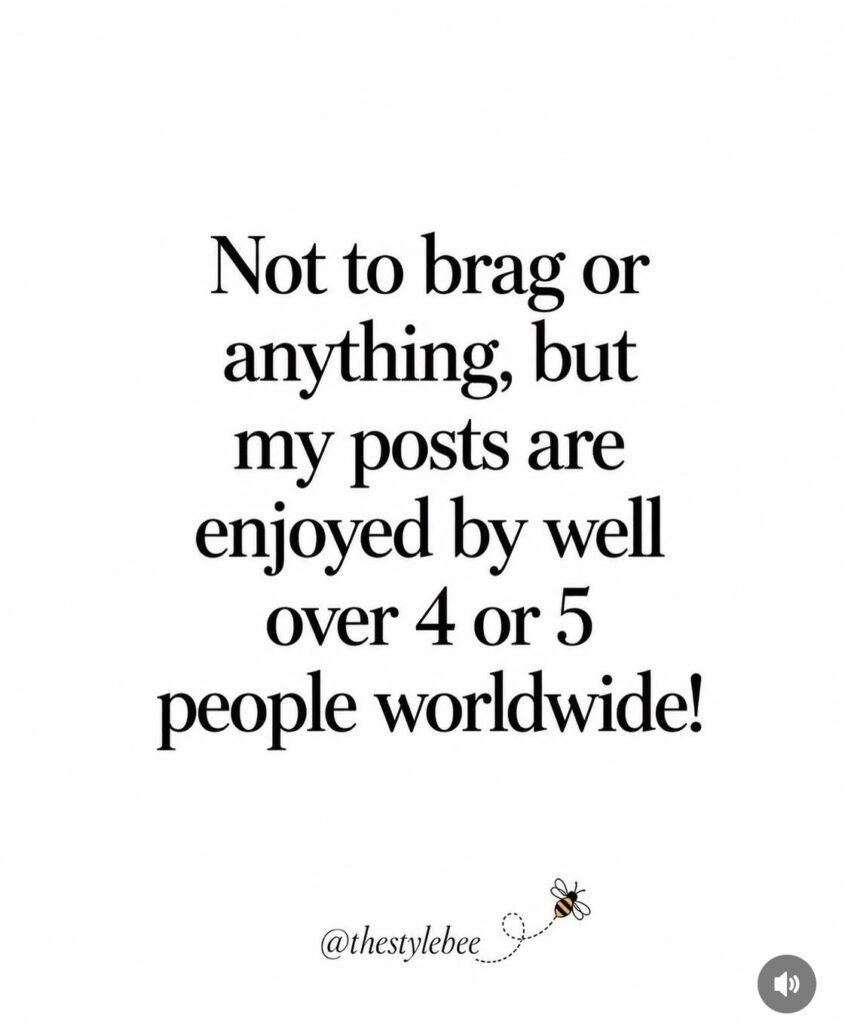
I wish it was 4!
Now, I never write stuff to go viral, but I hoped it would spark some discussion.
But I was also aware that people involved in education might share nothing because it is something they have dealt with, and they might not want others to see. Or, they are worried about how their comments might be misconstrued and worried about backlash. Or, maybe, it is a bad question.
I am totally fine trying new ideas and having them fail. I am not okay with not trying and wondering why I didn’t even try in the first place.
Too many people overthink their ideas and move toward no action. I tend to take action and think about it later.
But one of the reasons I was excited about the post in the first place is that there is no “right” answer.
There might be a right answer for your community and context, but some ideas in your solution might work or not work in mine. And vice versa.
Again, referencing “Forward, Together,” this was the hope of the entire book:
“One of my driving beliefs is that the experts are those closest to the work. I have seen the value and impact of sharing my learning to inspire others, but as educators, you’re the experts. You are the ones closest to the work in the community, the ones who take new ideas and make them work based on what you know and what’s needed in your context.”
But there are two things that I want to point out.
First, many do not want to have the “discussion” in the first place. Not because they don’t want it, but because being told the answer and just embracing that is easy. So many ideas implemented in education are not nuanced, but come from violent pendulum swings.
The problem is thinking that any clear, specific approach to anything will work perfectly. It never does.
Because we always have to deal with the most important variable in education: human beings.
We are all different.
We have different experiences in the past, and hopes for the future, and things we are dealing with in the present, good and bad.
As an example, I am often asked about very specific behavior issues with students and “What would you do?” Now, I might be able to share an idea, but EVERY TIME, the first thing I say is, “I have to meet the student.” No “solution” I share with you will work for every student. It would be great if it did, but I would be lying to you if I said: “My solution will work 100% of the time!”
If you met my three kids, you would have to understand that they are VERY different from each other. What might work with one won’t work with the other two. And my kids are different from other kids.
If you told me, “We started this thing in our school, and it is proven to work with 90% of our students!” my first thought would be, “So what are you doing for the other 10%?”
And that leads to the second thing.
We can learn from others’ experiences and viewpoints, but nuance is essential. Most solutions are not in the extremes, but lie somewhere in the middle. Are we willing to have those discussions, or do we want to default to being on one side or the other? In fact, by my nature, when I am told there is only one way to do something, I want to push back the most.
When the world feels more polarized than other times, conversations and discussion become more essential to finding a better way.
As I have said before, “Forward, Together” is always the goal. This doesn’t mean forward toward my solution on anything. It is about finding the best solution for the community or individuals you serve. That will rarely happen through debate, but will often happen through discussion.
After writing this post, I asked ChatGPT to suggest some good discussion questions based on what I wrote, and I think this could lead to some great conversations. I just wanted to share them with you.
Discussion Questions
- What keeps people in education from engaging in meaningful discussions when there isn’t one clear “right” answer?
- How do we learn from what works for others without assuming the same solution will work in our own context?
- How can we create a culture where people feel safe sharing different perspectives in search of a better solution, rather than trying to win a debate?
